

Chocolate Coins
Currency you can eat.
- CategoryChocolate
- First appeared1900s
- CountryBritain
- How it is madeMoulded gummy
- DietaryVegetarian
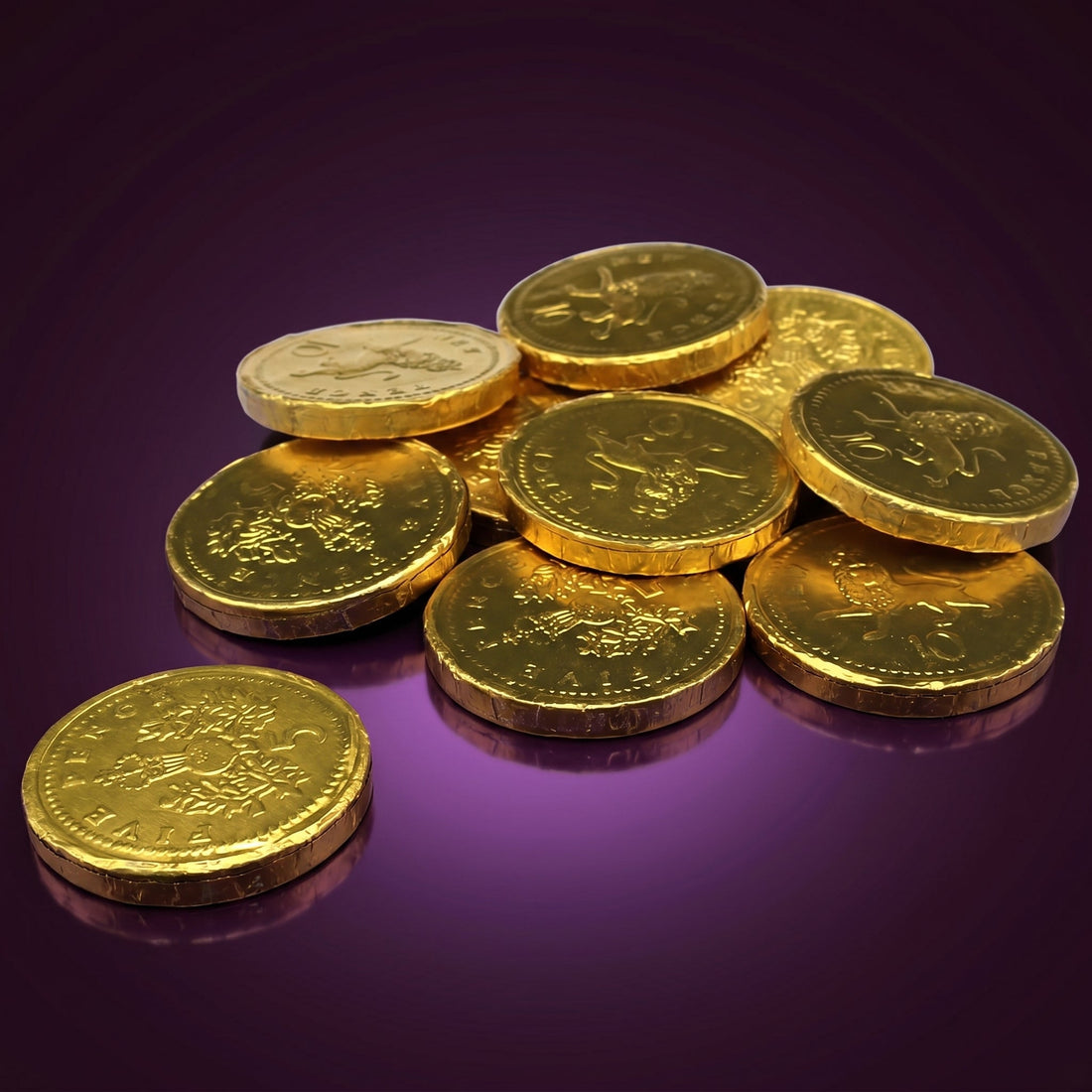
What it is
A thin disc of chocolate wrapped in gold or silver foil stamped like a coin. More about the unwrapping than the eating, which is why they turn up at Christmas and in party bags.
Taste



Where it comes from
Chocolate coins are tied to two traditions. In the Netherlands and Belgium they belong to the feast of Saint Nicholas in early December, and in Jewish tradition chocolate gelt is given at Hanukkah, a custom that grew out of giving children real coins. Dutch makers began producing foil wrapped chocolate coins in the twentieth century and the British Christmas stocking adopted them wholesale.
What it's made of
A milk chocolate disc with a minimum of 28% cocoa solids is moulded, cooled and wrapped in printed aluminium foil by machine. The foil is the expensive part, not the chocolate.
Ingredients and allergens
Ingredients
May contain traces of cereals containing <strong>gluten</strong> and <strong>nuts</strong>. Sugar, whole <strong>milk</strong> powder, cocoa mass, cocoa butter, <strong>whey</strong> powder (<strong>milk</strong>), emulsifier: <strong>soya</strong> lecithin; flavouring. <strong>Milk</strong> chocolate contains cocoa solids 28% minimum, <strong>milk</strong> solids 16% minimum.
Allergens
Contains: Milk, Soya. May contain: Gluten, Tree nuts


